DC NFT Platform
Design of the DC NFT marketplace that brought 50,000+ collectors and $13.9M in sales from an audience that was 95% new to Web3.
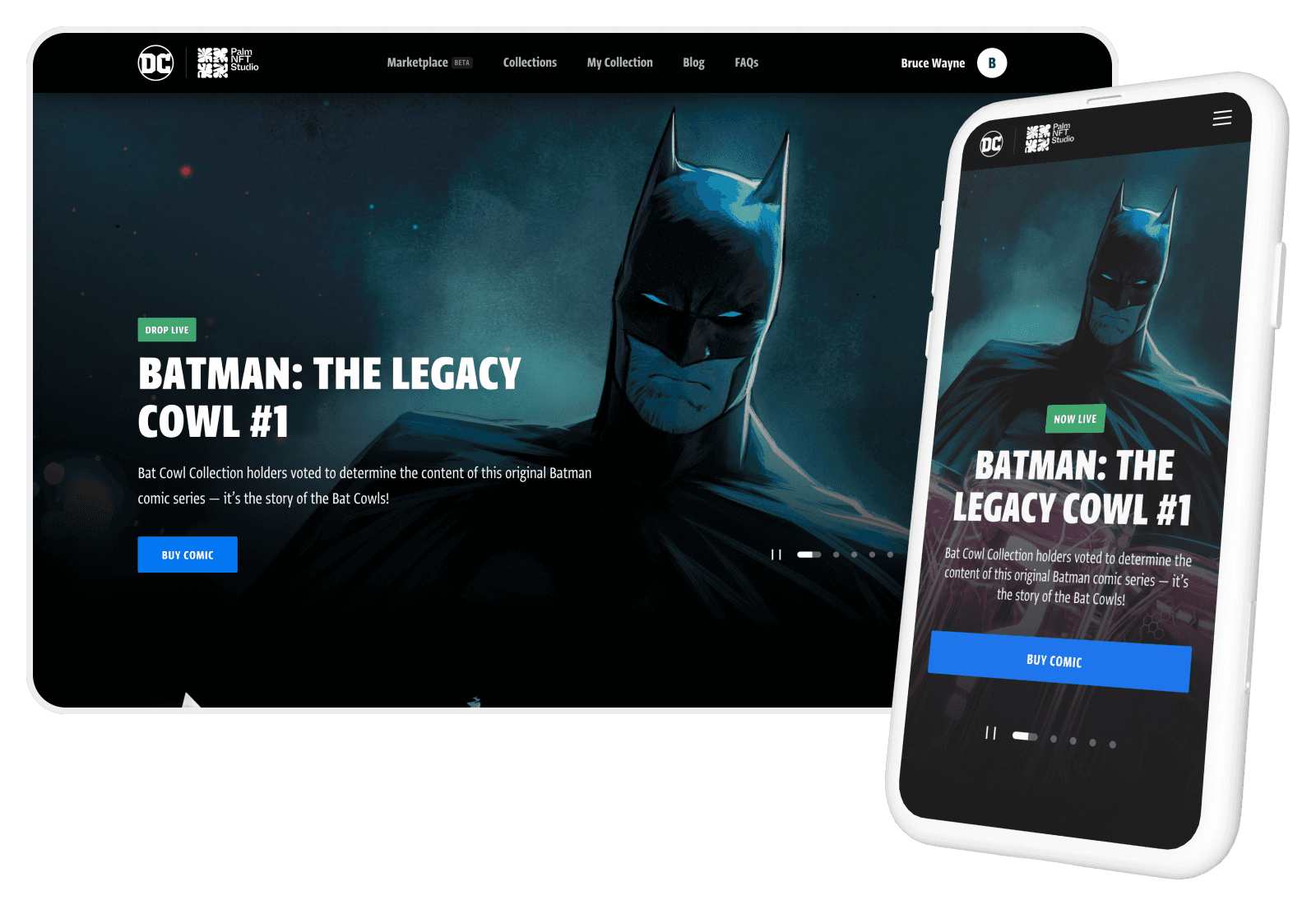
Sprint to launch
4 months
Led desktop and mobile design, design system, and core flows, timed to The Batman release
Launch
2022
Bat Cowls shipped on time, but sales fell short
The study
post-launch
Stepped into the Design Director role and led a 62-participant research study across 8 cohorts
Evolution
2022 to 2023
New features shipped to the community every 52 days
Context
The DC NFT Universe let DC fans collect original artwork, buy and trade digital collectibles, and help shape storylines that appeared in real comic books. I owned desktop and mobile design, the design system, and every core flow: marketplace, onboarding, purchase, sell, withdraw, and the collectible comics reader. Mid-project I stepped up to Design Director, leading the team through launch, a major research study, and the platform’s evolution. We had roughly four months to ship, timed to the release of The Batman.
$13.9M
Net sales
50K+
Unique collectors
5
Collections launched
1
95% of DC fans were not Web3 native
Crossing DC’s 25.5% comic market share with the 22% of Americans who owned cryptocurrency put roughly 95% of the audience outside Web3: no wallets, no crypto, no interest in learning either. The technology was the barrier, not the product.
2
Collectors expected wallets and scarcity
Crypto-native collectors assumed MetaMask, ETH payments, and low mint counts. A custodial platform with credit card checkout felt like a toy, and 200,000 minted Bat Cowls was the opposite of scarce.
“I am so disappointed I can’t trade this on OpenSea or move it to my MetaMask.”
NFT collector, from the post-launch study
3
No time for research before launch
The timeline left no room for user validation. We worked from proto-personas, data triangulation, and signals from the DC NFT Discord, and shipped on assumptions.
4
Critical features were cut from MVP
Crypto wallet support and ACH funding did not make the four-month scope. The post-launch research would prove both cuts were fatal to conversion on each side of the audience.
Research and discovery
With no time for interviews, discovery ran on market data, competitive analysis, and community signals.
95%
of DC fans not Web3 native, by data triangulation
1,100+
community members screened after launch
8
competitive marketplaces analyzed
Proto-persona
DC brand fans
Not crypto native, spend on entertainment and collectibles, need conventional e-commerce
Proto-persona
NFT collectors
Web3 native, driven by rarity, mint numbers, and tradability

Proto-personas: built from data, validated only after launch.

The DC NFT Discord was used as an early signal from users before launch.
Key decisions
E-commerce patterns over Web3 conventions
The 95% number made the call: the platform would look and feel like a normal store. Credit card checkout, custodial wallets, plain language. Crypto conventions were the exception, not the default.
The call I made: design for the 95% who had never owned a digital asset, and make the 5% tolerate convenience.
Delay KYC until purchase
Identity verification is the highest-friction moment in fintech onboarding. We moved it out of signup entirely, so fans could browse collections with zero commitment, and partnered with Sardine to verify identity only when money moved.
The call I made: let people fall in love with the collection before we asked for their documents.
In for launch
Onboarding flow
Marketplace and collections
Buy flow with credit card
Sell flow and secondary market
Withdraw flow with credits
Bat Cowl reveal experience
Cut from launch
Crypto wallet support
Cut for scope inside the four-month window
ACH funding
Cut for scope inside the four-month window
Both were reasonable scope calls under the deadline. The post-launch study showed each had become a conversion barrier for one side of the audience.
Design solution

Every flow before high fidelity

Wireframes
Onboarding flow
The onboarding flow for the DC NFT Marketplace was designed to be seamless and intuitive without the friction of most blockchain products. We decided to delay the KYC verification to the purchase flow to limit the barrier to entry for users just wanting to learn about the platform and peruse the collections.
Marketplace and collections
Purchase flow
Our goal was to structure the buying and selling processes to emulate a typical e-commerce interaction, given that the intended audience comprised enthusiasts of Batman and the DC brand who had little to no familiarity with NFTs or blockchain technology.
Withdraw flow
I designed the credit withdrawal flow: after selling on the secondary marketplace, users could spend their Palm credits on new NFTs or cash out to a bank account via ACH. We partnered with Sardine for identity verification, which took the friction out of onboarding. At the end of the purchase we had a "Bat Crate" opening animation that unveiled each holder's NFT, which brought delight to our users and received positive feedback.
Palm design system
A shared system kept two platforms and five collections visually coherent while shipping every sprint.

The launch fell short. The study explained why.
Bat Cowls shipped on time and the platform held. Sales did not meet projections, and we had shipped without validation, so we could not say why. I led a 62-participant study across 8 cohorts, from crypto natives to skeptics, to find out.
1,100+
screened, then surveyed
62
interviewed across 8 cohorts
Quant plus qual
run in house
“If I had known I could have bought one with a credit card, I would have.”
DC brand fan
“I have crypto to play with, but not fiat.”
Crypto native
“I think NFTs are a scam. Why would I pay $300 for a JPG of a monkey?”
Skeptic
Insight 1: we failed to convert brand fans because of Web3’s barrier to entry and unfamiliar nomenclature, the exact features cut from MVP.
Insight 2: negative public sentiment around NFTs suppressed demand before fans ever reached the platform.
The study cost a fraction of what launching without it did. Every product decision after this had research behind it.
What changed
The findings reset the roadmap. We simplified nomenclature, leaned into fandom over crypto, and shipped new features and utilities to the community every 52 days. With 60% of traffic on mobile, the workflow went mobile-first.
Mobile optimization
We observed that 60% of our traffic came from mobile users during and after the launch. Due to this, we doubled down on our mobile-first workflow and ensured all features were accessible on mobile for our projects.
Impact
The platform recovered from a launch that missed, because the team finally knew exactly who it was building for. It also became a launchpad for licensed drops beyond Bat Cowls, shipping collaborations with Archie Comics, DC Collectible Comics, and the Sex Pistols, among other brands.
$13.9M
net sales across all collections
50K+
unique collectors of blockchain-backed comics
$7.6M
net sales from the digital comic collection
5
collections launched, from Bat Cowls to DC3
52 days
average cadence of new community features
Webby
2023 nominee
A marketplace built for people who did not know what an NFT was, and mostly did not want one, produced one of the category’s few mainstream successes: measured in collectors and revenue, not hype.